
Monthly archive series: November 2024. Written and first published in October 2026.
Bathrooms often need less decoration and more careful preparation. Mirrors reveal the opposite side of the room, glass shows fingerprints and small surfaces collect everyday items. A few minutes spent clearing and checking those areas can make the fixtures and layout much easier to understand.
The aim is a clean, accurate view of the bathroom, including the space around the vanity, toilet, tub and shower. Resist the temptation to make the room look like a spa if doing so hides the features buyers need to evaluate. Simple preparation usually gives the photographer more useful options.
Clear the surfaces that attract attention
Put away toothbrushes, medication, razors, personal care products and loose packaging. Store them in a location that will remain outside the agreed views. Leave only a few purposeful items if the room needs them, and avoid filling the vanity with decorative objects that conceal counter space.
Check the floor as well as the counter. Laundry baskets, scales, cleaning supplies and waste containers can interrupt the view of a small room. Move portable items where practical, keeping doors and walking routes clear. Do not remove a necessary safety aid or alter a fixture without an appropriate plan.
Treat the mirror as a second camera view
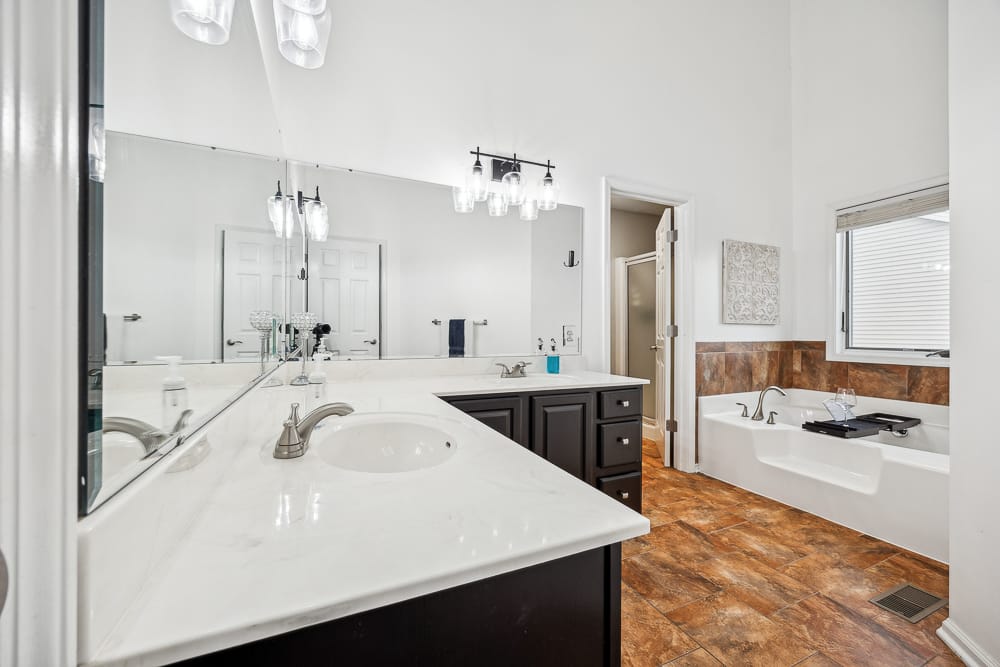
Look into the mirror from several positions. It may show an open bedroom door, personal belongings, a hallway or the person preparing the room. Clear the visible adjoining area and store sensitive items before the appointment. The reflection can matter as much as the surface directly in front of the camera.
Clean accessible mirrors and glass using suitable methods for those surfaces. If a mirror has damage or a fixture has a visible defect, tell the agent rather than attempting to disguise it. The photographer can choose a readable composition while the property remains accurately represented.
Make towels and textiles quiet supporting details
Use clean, neatly arranged towels without filling every rail and hook. Straighten a shower curtain and consider whether it should be open enough to show the fixture behind it. The choice depends on what the image needs to explain and the actual condition of the tub or shower.
Floor mats can either help organize the room or hide its usable floor area. A small, neat mat may be fine; several overlapping rugs can become distracting. Do not use textiles to conceal damaged flooring. If a condition needs attention, handle it through the property’s preparation and disclosure process.
Let the fixture arrangement guide the photographs
One image may explain a compact half bath. A larger bathroom may need another view for a separate shower, tub or vanity area. Tell the photographer which features matter and allow the angles to serve those features rather than asking for the entire room to fit into one extreme view.
If the bathroom’s connection to a bedroom or hall is unclear, a floor plan or tour can provide context. Additional still images should contribute new information, not repeat the same vanity from several nearly identical positions.
Finish with a practical readiness check
Make sure the room is dry, ordinary lights work and the door can open fully. Close drawers and cabinet doors that are meant to be closed. Tell the photographer about any unusual switch, fragile fitting or area that should not be handled. Leave specialized repairs to the appropriate professional.
The TREM419 preparation checklist can help the household make a consistent final pass across several bathrooms. Assign one person to confirm that personal items have been stored and adjoining spaces visible in mirrors are ready too.
Before publishing, review the finished photograph at a useful size. Check that reflections do not expose private information and that the image agrees with the listing’s description. A bathroom photograph has done its job when the viewer can understand the fixtures, finish and arrangement without being distracted by the household’s daily routine.
Photograph from the TREM419 property media library, used to illustrate this guide.