
Monthly archive series: January 2025. Written and first published in October 2026.
Virtual staging is useful when an empty room leaves viewers unsure how the space might be arranged. Furniture can suggest a seating group, dining area or workspace while the original photograph preserves the room’s actual condition. The value comes from that explanation, not from making the property appear to contain features it does not have.
Before ordering virtual staging, decide which question the edited image should answer. Then choose a suitable room, keep the unmodified photograph and plan a clear label. Those three decisions make the result easier to use responsibly across the listing and supporting marketing.
Choose a room with a genuine presentation problem
A long living room, open-plan area or empty secondary room may benefit from a proposed furniture arrangement. A room that is already furnished clearly may not need the same treatment. Prioritize spaces where the viewer needs help understanding a plausible use, rather than staging every image simply because the option is available.
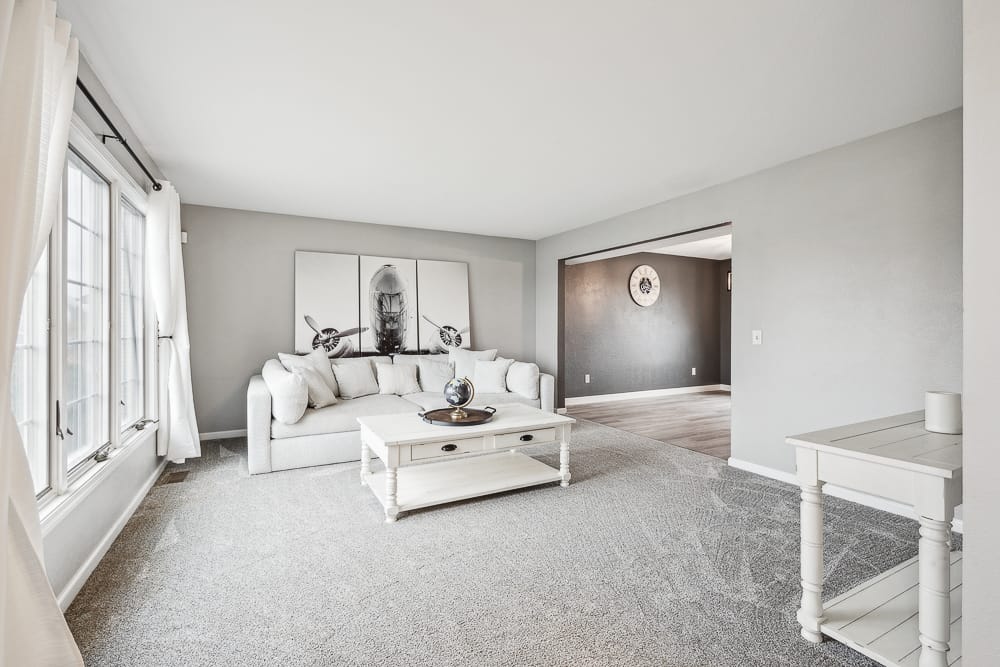
For example, an empty living and dining area might be difficult to read as two connected zones. A restrained arrangement can illustrate that possibility. It should leave doors, windows, circulation and fixed features visible so the proposed use remains understandable.
Write a brief that respects the real room
Describe the intended function, general furniture style and features that must remain visible. Ask for a plausible arrangement, not the maximum number of objects that can be placed in the frame. Furniture shown in an image should not be treated as proof that a particular real-world item will fit.
Do not request changes that conceal damage, remove permanent structures or invent a different view. A staging brief should distinguish movable furnishings from alterations to the property. If the seller wants to illustrate a renovation concept, that is a different kind of representation and needs its own clear explanation.
Keep the original beside the decision
Retain the unmodified photograph in the property’s media library. Make it easy for the agent and buyer to see the room’s actual condition, using the listing platform’s permitted presentation. Do not overwrite the original delivery with the staged version or rely on a filename that becomes invisible after upload.
The label should be visible where the edited image is viewed. Confirm the wording and placement with the broker and applicable MLS or platform. The National Association of REALTORS® risk guidance discusses image-editing disclosure and the need to follow relevant rules. Requirements can differ, so avoid assuming one label satisfies every destination.
Review the result as a buyer would
Look first at the permanent features. Are doors, windows, outlets and built-ins consistent with the original? Does the furniture arrangement preserve a believable route through the room? Are scale and shadows convincing enough that the illustration does not distract from the space?
Then check the message. A desk in a room should not quietly turn it into an approved office use, and a bed should not establish a legal bedroom. Keep the room name and listing description aligned with verified property information. The illustration can suggest a possibility without certifying it.
Use the treatment where it adds information
TREM419 includes virtual staging among its media services. Compare the available options in the current package overview, then select the rooms that benefit most. More staged images do not automatically make the property clearer.
A practical final set gives viewers the actual room, the proposed arrangement and an unmistakable explanation of the difference. Keep captions, filenames and any brochure treatment consistent with that distinction. If a platform strips a label or crops it away, correct the presentation before using the image there. The edited photograph should remain a helpful illustration throughout its journey, not become an accidental claim about what is physically present.
Photograph from the TREM419 property media library, used to illustrate this guide.