
Monthly archive series: April 2025. Written and first published in October 2026.
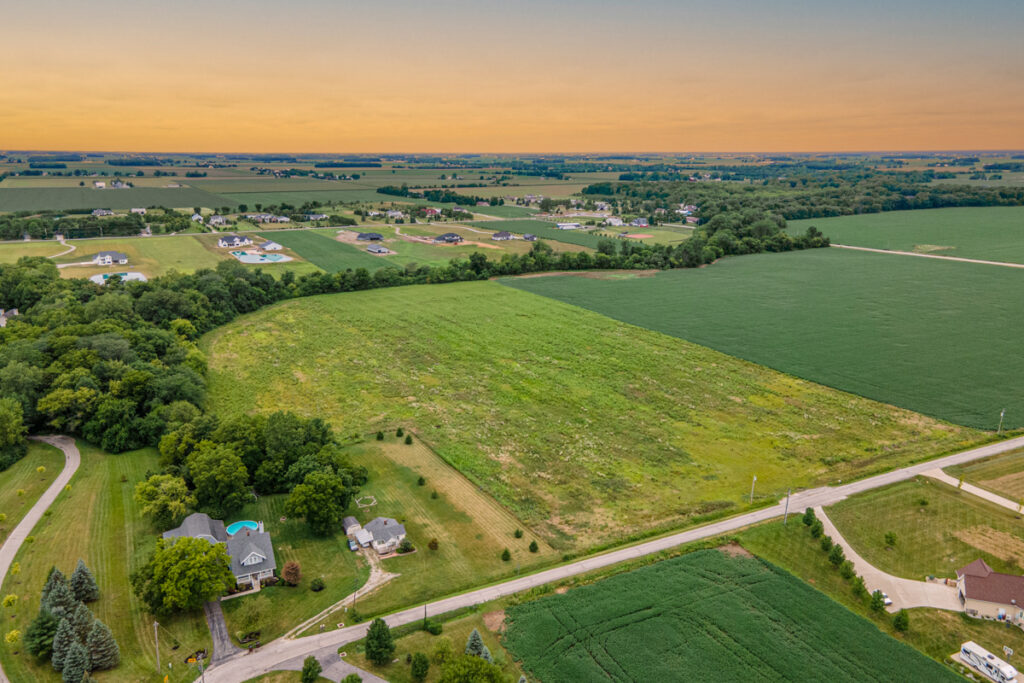
Neighborhood photographs belong in a listing when they explain relevant context that the property images cannot. A nearby public space, a street setting or an aerial view of the surrounding area may help a viewer orient themselves. The images become less useful when they are decorative, poorly labeled or easily mistaken for features included with the property.
Choose context photographs with a specific purpose. Then make the relationship clear: on the property, shared with others, nearby or simply part of the broader area. A viewer should not need local knowledge to understand that distinction.
Ask what information the image adds
A photograph of a street approach can help someone recognize the setting. An aerial may show the relationship between the building, surrounding streets and open areas. A separate amenity image may explain something the listing discusses, provided its relevance and availability are verified.
Avoid filling the gallery with attractive regional landmarks that do not help someone evaluate this property. A well-known Toledo destination may be visually recognizable without being particularly close or connected to the listing. The photograph should earn its place by answering a real location question.
Use plain, verifiable labels
Identify the place accurately and state its relationship to the property. If it is a public park, say so. If an outdoor area is shared by a development, make that clear. If access depends on membership, association rules or another arrangement, verify the relevant information before implying it is included.
Do not infer ownership from proximity. A pond visible behind a house, a path beside a development or a parking area near a commercial building may belong to someone else. Photography can show the physical relationship, but the listing professional needs to confirm the rights and terms that affect use.
Keep travel and boundary claims out of guesses
An aerial photograph does not establish a property line or a guaranteed travel time. If a caption includes distance or access information, verify it through an appropriate source and explain what is being measured. Avoid an unsupported phrase such as a few minutes away when the route and conditions are unspecified.
Use descriptive language about the visible setting rather than broad judgments about the people who live there. The purpose is to help readers understand the place and the property, with factual information they can investigate further. A photograph cannot substantiate sweeping claims about a neighborhood’s character or future.
Confirm that you can use the photograph
Do not copy an image from a tourism website, another listing or a search result simply because it depicts a nearby location. Use photography supplied under an appropriate license, obtain permission or commission the needed view. Keep the source and usage terms with the property media files.
For new capture, discuss access and any restrictions before the appointment. A commercial interior, private amenity or managed site may need permission. The TREM419 service overview can help you identify whether ground photography or aerial context would better answer the question.
Give context a supporting role in the gallery
Establish the actual property first. Then add the few context images that contribute useful information, with captions that remain understandable on a phone. Do not let a beautiful nearby feature become the lead image if it could cause someone to mistake it for the offered property.
Review the complete presentation with the agent: are the places identified correctly, are access claims verified, and is the difference between property and neighborhood obvious? The residential media overview provides a starting point for planning the property’s core coverage. Add neighborhood material only where it helps that presentation, and keep the labels as careful as the photographs themselves.
Photograph from the TREM419 property media library, used to illustrate this guide.