
Monthly archive series: April 2024. Written and first published in October 2026.
An exterior photograph can show a handsome house while leaving a simple question unanswered: where do visitors actually enter? A recessed door, side approach, long walk or garage-dominated elevation may need a second view to explain the arrival experience.
Spring preparation is a useful opportunity to look at the approach as a first-time visitor would. The goal is to show a clear route from the street or parking area to the entrance, then connect that entrance to the interior. Good listing media should help someone recognize the property when they arrive for a showing.
Trace the route before arranging the scene
Walk from the usual visitor parking location to the front door. Note turns, steps, gates and changes in elevation. Identify which parts belong to the property and which are shared or public. That distinction matters particularly for attached homes, small multifamily buildings and properties with more than one entrance.
Tell the photographer which entrance the listing should emphasize. Do not assume the most visible door is the main one. If an entrance is shared, label it that way in the marketing presentation. A photograph should not imply private access where the arrangement is communal.
Make permanent features visible
Clear loose items from the walk and landing. Store delivery boxes, portable bins and tools. Straighten a doormat and arrange movable planters so they do not hide the door, steps or railings. Keep the house number visible where it is part of the normal exterior, while following any specific privacy requirements for the marketing.
The entrance does not need an elaborate decorative installation. A few ordinary details can be enough when the door, trim, paving and surrounding space are readable. Avoid placing furniture where it makes the approach look narrower or requires visitors to squeeze past it.
Choose views with different jobs
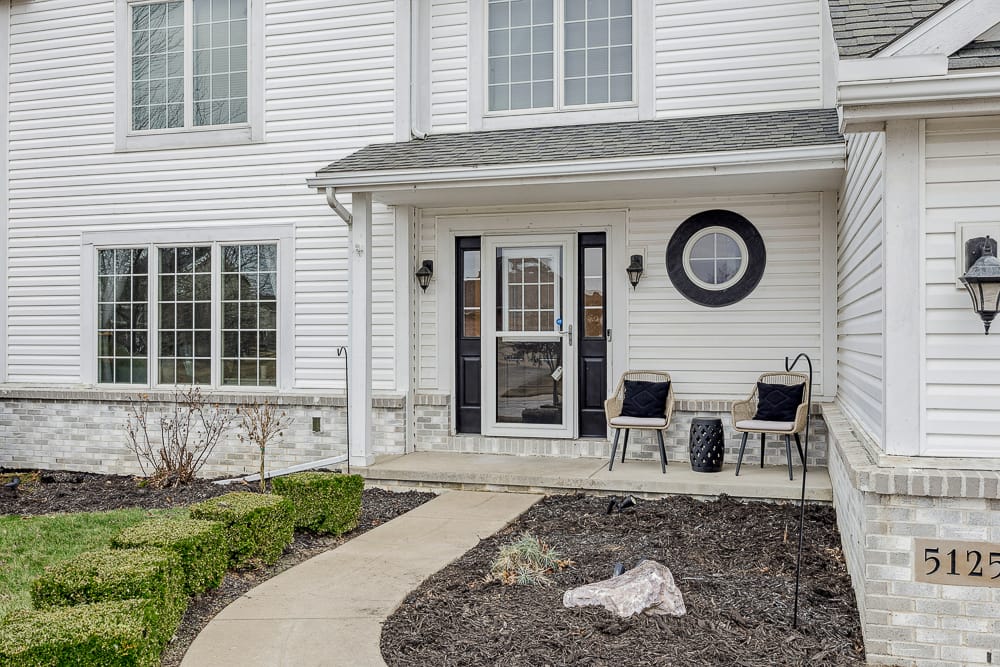
A broad exterior establishes the building. A closer entrance photograph can explain shelter, architectural detail or the relationship between the door and a porch. An interior entry view shows where someone goes next. These images are most useful when they provide different information.
For a hypothetical house with a covered porch, one photograph might show the full front elevation, another the depth of the porch, and a third the entry hall’s connection to the living room. Three slightly different crops of the front door would not explain the property as well.
Our property media gallery shows how wider and closer views can work together. Use that principle to brief the photographer, rather than prescribing an exact camera position before the site is assessed.
Avoid promising accessibility from appearance
A level-looking path or wide doorway in a photograph does not establish that a property meets a particular accessibility standard. Keep captions descriptive: covered entrance, paved approach or a visible step, when those statements are accurate. Verify any stronger claim through the appropriate documentation and professional advice.
Likewise, do not describe a second entrance as suitable for a separate dwelling or business solely because it exists. Photography can show the physical feature. The listing professional needs to confirm the permitted use and any relevant restrictions separately.
Check the approach on the appointment day
Weather, parked vehicles and ordinary household activity can change the prepared scene. Make a final pass shortly before the photographer arrives. Ensure the route is safe, gates can be opened as agreed and the correct entry instructions have been supplied.
- Remove temporary obstructions from the planned views.
- Confirm which entrance and parking arrangement the listing should explain.
- Identify shared areas and any access limitations.
- Keep interior entry surfaces and nearby rooms ready too.
The TREM419 preparation process helps connect these details to the appointment. A clear arrival sequence gives the listing a practical beginning: viewers can understand the building, recognize the entrance and follow the route into the home.
Photograph from the TREM419 property media library, used to illustrate this guide.